Transforming Billings Hall — North Geothermal Plant — into one of Miami’s most innovative energy facilities
Expansion of geothermal heating and cooling improves efficiency, lowers operating costs, and will help Miami University achieve its 2040 carbon neutrality goal
Transforming Billings Hall — North Geothermal Plant — into one of Miami’s most innovative energy facilities
Expansion of geothermal heating and cooling improves efficiency, lowers operating costs, and will help Miami University achieve its 2040 carbon neutrality goal
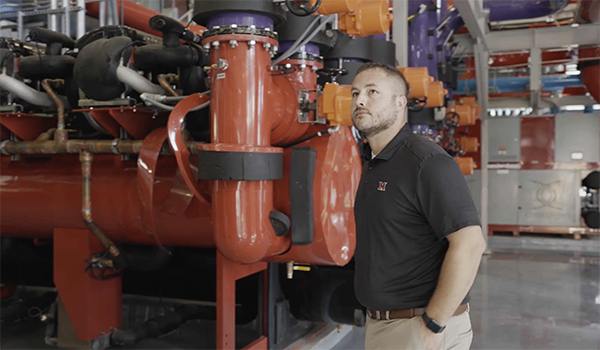
Video: Take a tour of the North Geothermal Plant at Billings Hall with Vince Weatherstein, director of Energy Systems at Miami University. Videography by Cameron Johnson
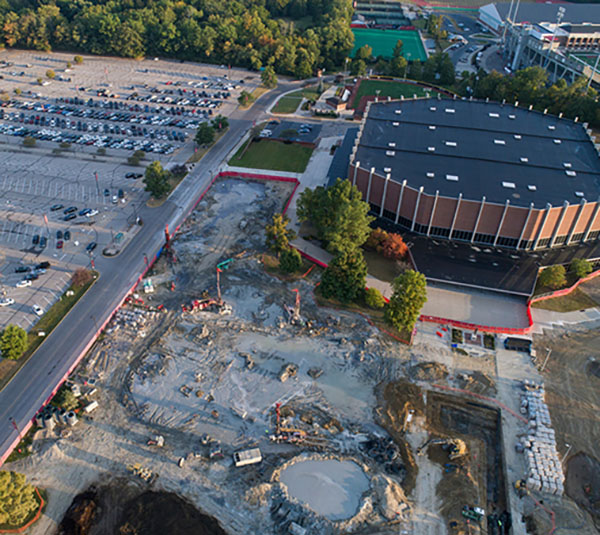
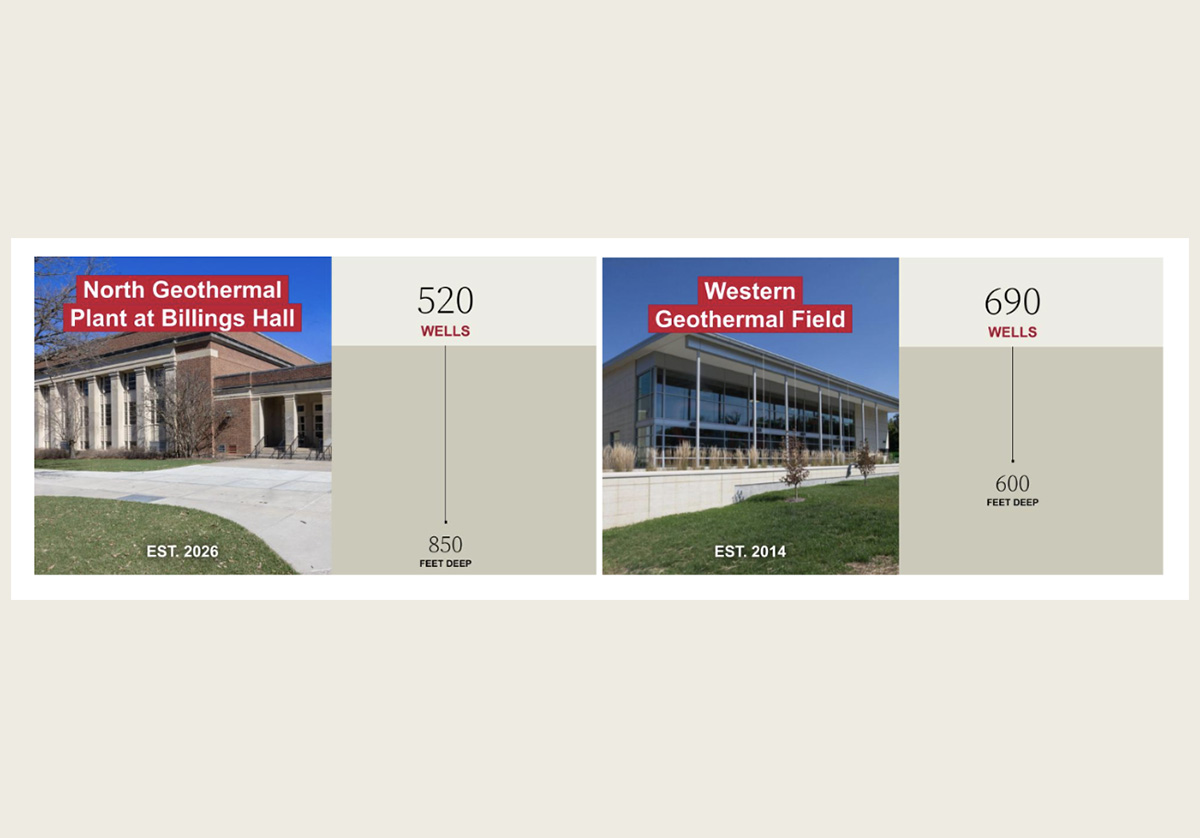
The two-year project to convert the North Chiller Plant at Billings Hall to Miami University’s second geothermal plant was completed earlier this summer. The project began in summer 2024 with the drilling of 520 geothermal wells, each 850 feet deep, under the south lawn of Millett Hall, a block north of Billings.
Today, the North Geothermal Plant provides efficient heating and cooling to approximately 25 buildings across the north side of campus, about 27% of the current campus building gross square footage.
Innovative energy facility
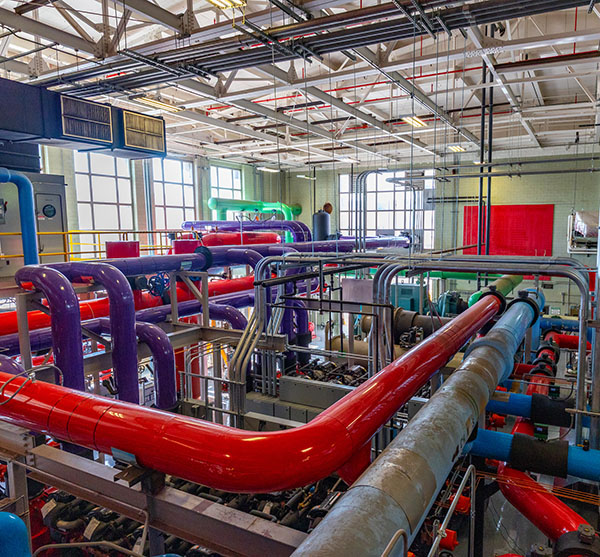
Billings Hall was built in 1955 as Miami’s natatorium and held its last swim meet in 1994. It has been transformed into one of the most innovative energy facilities on campus.
In 2016, the building was converted to the North Chiller Plant. It supported the conversion of buildings in North Quad off steam heat and cooling and on to energy efficient Heating Hot Water (HHW).
The conversion of the North Chiller to the North Geothermal Plant, completed in 2026, eliminates more than 5,810 metric tons of carbon dioxide equivalents in emissions (MTCO2e) annually — equivalent to the emissions of more than 1,300 gas-powered cars.
This energy systems conversion is part of the Miami 2040 Climate Action Plan and contributes to decarbonizing Miami’s Oxford campus.
How it works: Recycling thermal energy
During the summer, heat that had been previously removed from buildings and rejected into the atmosphere (with the Chiller Plant) is now captured and transferred into the campus heating hot water system.
When that heat is not immediately needed, it is stored underground within the geothermal wellfield, where it can be recovered and used during the heating season.
More innovation: The first co-located solar and geothermal energy system on a college campus
Miami’s Sharon and Graham Mitchell Sustainability Park was dedicated in April. The park, adjacent to the Western Geothermal Plant, includes two solar arrays — Western Solar North and South. The two arrays, with 3,336 solar panels combined, produce more than 2,000 megawatt hours (MWh) of electricity annually.
The Western Solar North array sits above the Western Geothermal Wellfield, marking the first co-located solar and geothermal project on a college campus.
Timeline: Major energy systems projects at Miami University
2010-11 – First geothermal installed: 17 wells, 600 feet deep, provide the geothermal exchange for Miami’s historic residence halls, Elliott and Stoddard Halls.
2014 – Western Geothermal Plant completed: 690 vertical wells, 600 feet deep, plus 133 loop horizontal pond heat exchangers. Currently serves 13 buildings on Miami’s Western campus, plus Shideler Hall and the newly renovated Bachelor Hall (cooling only) — about 9% of campus building square footage (in 2026).
2016 – Converted Billings Natatorium to the North Chiller Plant: This conversion took North quad buildings off steam heat and cooling and on to energy efficient Heating Hot Water (HHW). North and East quad residence halls were updated with central air conditioning.
2018-2019 – South Campus energy systems conversions: Included South Campus Chiller Plant providing HHW to 19 buildings on South Quad, including Goggin Ice Center and the Recreational Sports Center.
2026 – Simultaneous Heating Hot Water (HHW) installed: In Armstrong Student Center, MacMillan Hall, and Warfield Hall. Removal of Williams Hall and Wells Hall allowed for removal of steam pipes and installation of HHW in MacMillan and Warfield Halls.
2024-2026 – Conversion of North Chiller Plant at Billings Hall to North Geothermal Plant: 520 wells, 850 feet deep, serves approximately 25 buildings on north campus, around 27% of current building gross square footage.
2026 – First two solar arrays installed (2 MW): Western Geothermal North and eastern Geothermal South, at the Sharon and Graham Mitchell Sustainability Park. The two arrays, with 3,336 solar panels combined, produce more than 2,000 megawatt hours (MWh) of electricity annually.
Miami University is a signatory of Second Nature’s President’s Climate Leadership Commitment -Climate Commitment and is committed to carbon neutrality on its Oxford campus by 2040 (Miami 2040 Climate Action Plan). Miami is decarbonizing its campus through energy systems transformations, including geothermal exchange and solar energy, and has achieved a 50% reduction in utility-based carbon emissions since 2008. Miami’s 36 LEED Silver-and Gold certified buildings account for 36% of the gross square footage of buildings on the Oxford campus. Miami received its third AASHE STARS (3.0) Gold rating in summer 2025 in recognition of sustainability achievements and is named on the Princeton Review’s 2026 Guide to Green Schools. For more information, visit MiamiOH.edu/Sustainability.